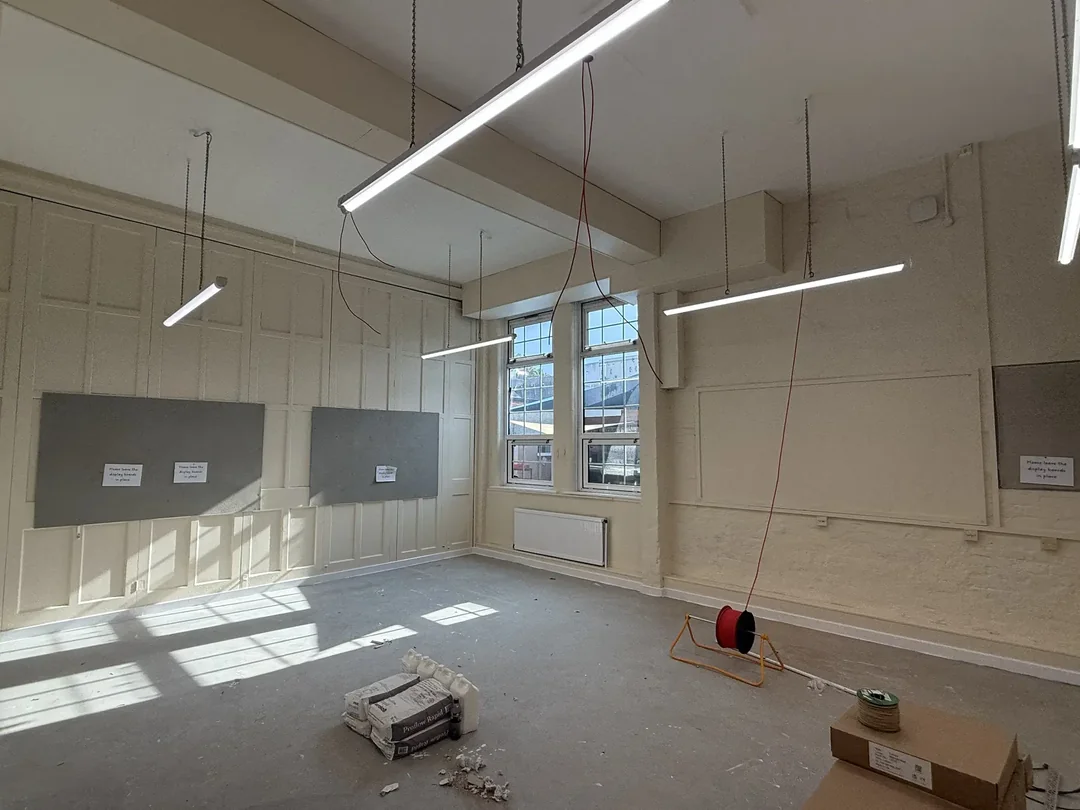
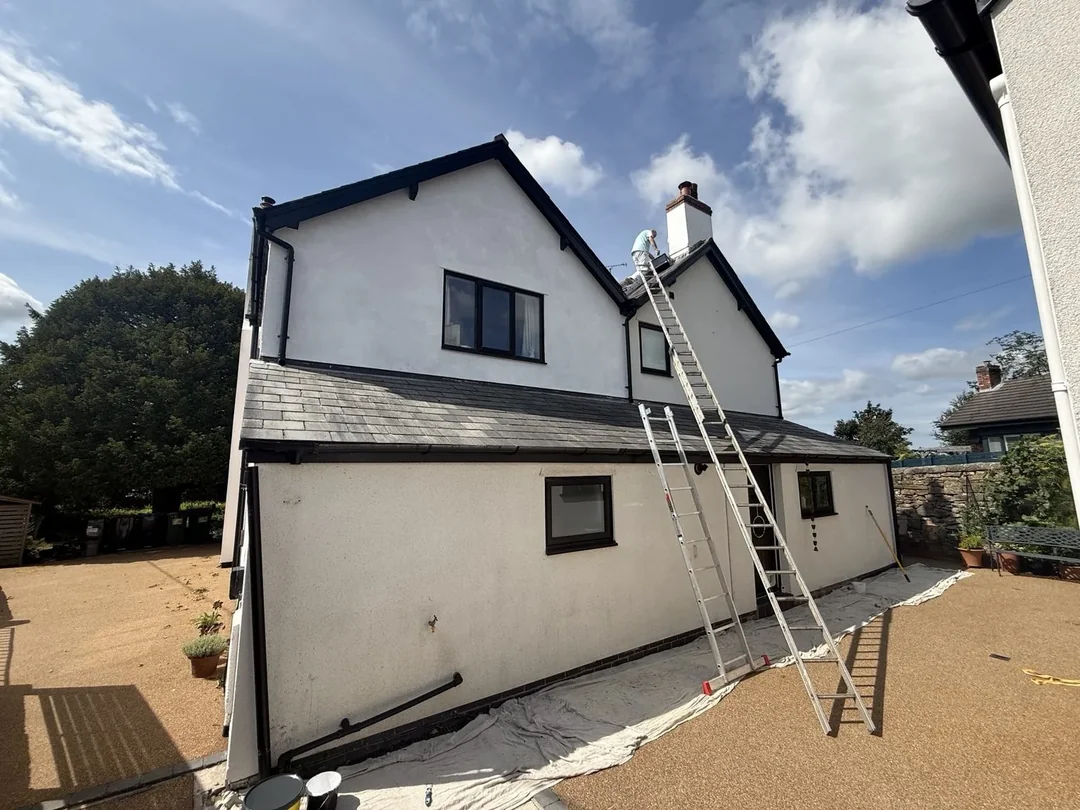
There is no single best access product for every high decorating task. The right choice depends on height, duration, surface, reach, ground conditions, tools, people below and whether both hands are needed.
Start with the risk, not the equipment already owned
Current HSE guidance says work at height should be properly planned, risk assessed and completed with suitable equipment by competent people. Work should be done from the ground where reasonably practicable.
A ladder is not automatically banned, but it is intended for situations where the risk is low and higher-protection equipment is not justified. HSE guidance uses around 30 minutes at a time as a prompt to consider alternative equipment; duration alone is not the full assessment.
Ladders and stepladders
Ladders can suit brief, light work when they can be level, stable and secured. They should be checked before use and kept away from doors, vehicles and public routes unless those hazards are controlled.
Do not overreach. Maintain the required contact and follow the manufacturer's labels. Improvised packing under ladder feet is not a safe levelling method.
Hop-ups and low work platforms
Low platforms can make repeated cutting-in and preparation more comfortable than constant ladder movement. They still require firm, level ground, an appropriate working load and enough space around the user.
A hop-up is not a substitute for a platform designed for a high stairwell or exterior elevation.
Towers and podiums
Mobile towers or podium steps can provide a larger guarded working area for longer tasks. They need the correct configuration, competent assembly, inspection and safe movement. Never move equipment with a person or unsecured materials on it.
Stairwell towers and other specialist configurations should be selected for that exact layout rather than improvised from general equipment.
Powered access
Scissor lifts, boom lifts and other MEWPs may be appropriate for high exterior walls, commercial units or obstacles, but they bring training, ground, exclusion-zone, rescue and inspection requirements. The machine type must suit the reach and site.
Consider the work being carried
Preparation can involve sanders, extraction hoses, fillers and tools. A method that seems adequate for a brush may be unsuitable when both hands or heavier equipment are needed. Falling-object controls and people below also form part of the plan.
When not to DIY
High stairwells, roofs, fragile surfaces, public areas and difficult exterior access can carry severe consequences. If the method is uncertain, stop and obtain competent advice. JP Whyte Decorators assesses access as part of quoting suitable interior and exterior work across Cheshire.
Official guidance
For workplace tasks, consult the Health and Safety Executive's current Work at Height and ladder guidance before choosing or using equipment.
Choose access from the task, not just the height
Consider how long you will work at height, whether both hands are needed, the weight of tools, the ground condition and the area you must reach sideways. A ladder may be suitable for short, light tasks; a platform or scaffold may be more appropriate for prolonged preparation and painting.
Check before every use
- Read the manufacturer's instructions and load rating
- Inspect feet, locks, rungs, platforms and stabilisers
- Use firm, level ground and protect the area below
- Keep the correct angle and maintain safe contact
- Never improvise with boxes, loose boards or furniture
Stairwells need special planning
Uneven levels and open edges make stair decorating particularly awkward. A product being sold as a stair platform does not make every stair configuration safe. Check dimensions, locking method and compatibility, and do not exceed the permitted setup.
Know when equipment is not enough
Weather, overhead electricity, fragile roofs, traffic routes and public access can turn a simple-looking exterior job into a specialist one. If you cannot establish a stable setup and controlled work area, do not proceed. A professional quote should identify access separately so the safest practical method is clear.
Would you rather have it done professionally?
Planning a decorating project in Cheshire? Call 07377 812846 or use the contact form for a free quote.
Get a free quote