Exterior timber moves with moisture and temperature. A lasting finish depends on sound wood, dry conditions, prepared edges and a coating system suited to the existing surface.
Inspect before sanding
Look for flaking paint, grey exposed timber, open joints, rot, failed sealant and areas that remain wet. Soft or structurally damaged timber needs repair before decoration. Painting over it only delays the visible failure.
Check the top and bottom edges of doors and gates, end grain, hinges and places where water sits. These are common weak points.
Clean and remove loose coating
Wash away dirt, algae and grease using a suitable method. Remove loose paint and feather firm edges. Control dust and take care with older coatings that may contain hazardous materials.
Do not use excessive heat near glass, sealant or dry timber. Follow current safety and product guidance for the preparation method.
Repair and prime
Use exterior repair materials compatible with the timber movement and coating system. Bare wood, knots or resinous areas may need specific treatment. Prime exposed areas within the manufacturer's recommended window.
Sealants should be paintable and suitable for the joint. Rigid filler across a moving joint is likely to crack again.
Choose a compatible system
Check whether the existing finish is paint, stain or another coating. The new primer, undercoat and topcoat should form one compatible exterior system. Follow spreading rates, coat numbers and drying times.
Plan suitable weather
Avoid applying paint to damp timber or when rain, dew, temperature or direct sun conflict with the product guidance. Surfaces can heat quickly in sun even when the air temperature seems acceptable.
Gates and garage doors
Confirm when a moving door can be closed without sticking and protect hinges, locks and seals. Vehicles, paving and neighbouring property need protection from dust and drips.
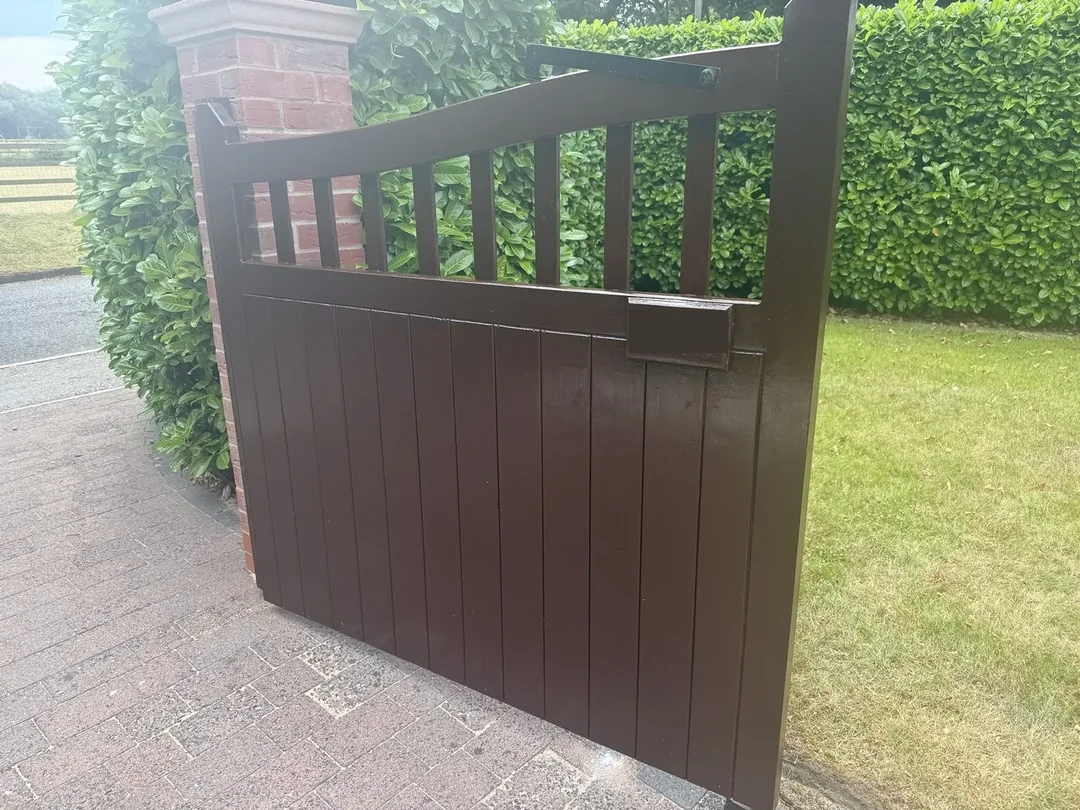
View a completed gate project
Our Cheshire timber-gate case study shows the condition before work and the finished result. JP Whyte Decorators can assess suitable exterior timber as part of a written quote.
Look for trapped moisture
Peeling at lower edges, joints and end grain often indicates water entry rather than a simple colour failure. Check drainage, gaps, failed sealant and rotten timber before decorating. Soft or structurally weak timber needs repair, not a heavier coat of paint.
Preparation determines durability
Remove loose coating, clean contamination, sand sound edges and treat bare areas with the specified primer. Resinous knots and previous stains may need a suitable blocking treatment. Keep dust away from neighbouring cars and property, and collect old flakes rather than washing them into drains.
Allow for movement
Gates and doors expand, contract and rub. Paint should not bridge drainage gaps or load hinges and closing edges. Check operation during the job and allow the full drying time before closing surfaces together.
Time the work around weather
The timber must be suitably dry and conditions must remain within the coating specification. Direct sun can make paint skin too quickly, while evening moisture can damage a slow-curing coat. Work around the elevation and forecast. Record the complete coating system, not only the final colour, so later maintenance uses compatible products.
Would you rather have it done professionally?
Planning a decorating project in Cheshire? Call 07377 812846 or use the contact form for a free quote.
Get a free quote