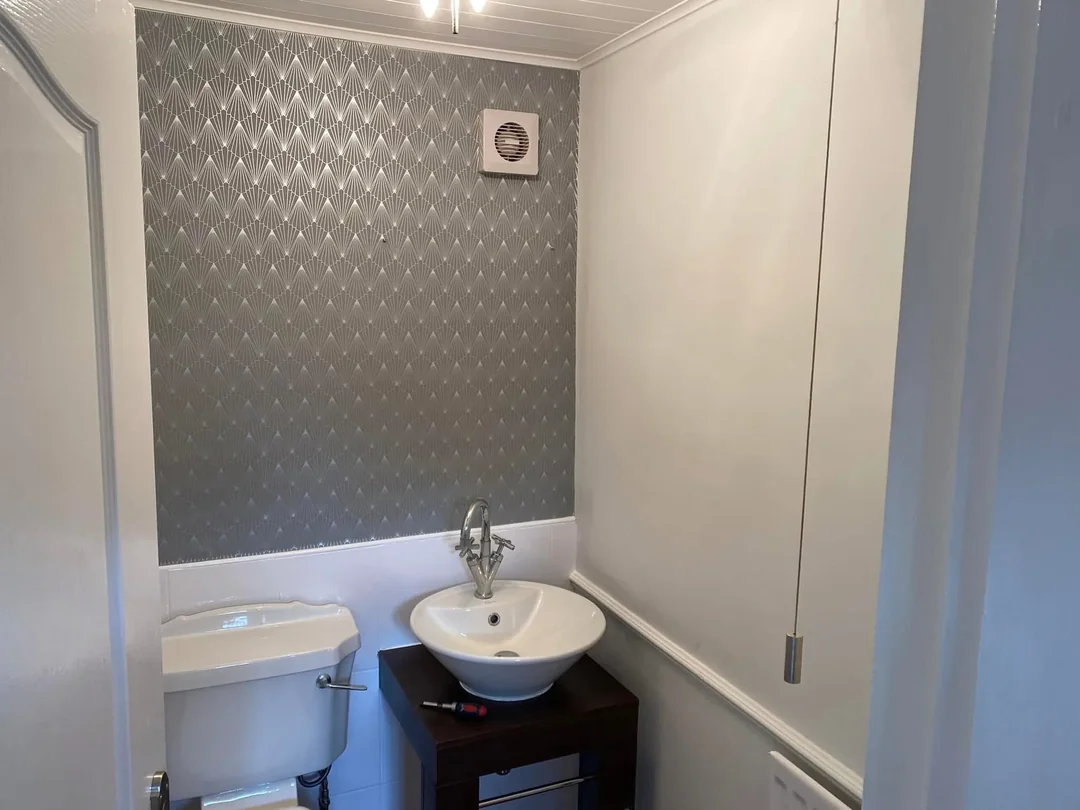
A feature wall works best when the wallpaper suits the room and the surface, not simply because the pattern looks good on a small sample. Scale, lighting, furniture and the number of interruptions all change how the final wall appears.
Choose the wall first
The clearest feature walls usually have a natural focal point: behind a bed, around a fireplace, at the end of a hallway or on the main uninterrupted wall of a room. A wall with several doors, windows or fitted units may break up a large pattern and create awkward narrow pieces.
View the wall from the main entrance and from where people normally sit. Think about whether the pattern should be a strong focal point or a quieter backdrop to furniture and artwork.
Check scale and colour in the actual room
Order a sample where possible and look at it in daylight and artificial light. Dark colours may feel richer but can reduce reflected light. Very small patterns can become busy over a large area, while oversized motifs may lose their effect if most of the repeat sits behind furniture.
Compare the wallpaper with flooring, curtains, fixed joinery and adjoining wall paint. A sample held flat against the wall gives a more useful impression than one viewed on a phone screen.
Read the roll information
Check roll width, roll length, pattern repeat, pattern match, hanging method and whether the paste goes on the wall or paper. These details affect the number of usable drops and the amount of waste.
- Buy enough from the same batch or dye lot.
- Allow for pattern matching and damaged lengths.
- Check whether extra rolls can be returned.
- Keep a full label for future reference.
Murals are different from repeat wallpaper because the numbered panels form one image. Measure the wall carefully and check how the design is cropped at your exact width and height.
Assess the wall beneath it
Wallpaper will not hide loose paint, damp, major cracks or rough filler. The surface should be sound, clean, dry, smooth and prepared for the chosen adhesive. Strong colour differences or absorbent repairs may show through lightweight papers.
Do not paper over an unresolved damp problem. New plaster, sealed surfaces and specialist wallcoverings may need a specific primer or lining system according to the manufacturer's instructions.
Plan the first drop
The first length controls the rest of the wall, so it must be set vertically rather than trusted to a corner that may not be straight. Decide where the pattern should centre and where the final narrow cut will fall before mixing paste.
When professional hanging helps
Expensive wallcoverings, murals, large repeats, uneven walls and multiple corners leave less room for correction. JP Whyte Decorators provides wallpaper hanging and feature-wall preparation across Cheshire and can assess the wall and material before quoting.
Start with the wall, not the pattern
A feature wall works best when the surface is dry, sound and reasonably flat. Strong side light can reveal seams and defects, while radiators, sockets, chimney breasts and out-of-square corners increase the fitting time. Inspect the wall in daylight and decide whether lining paper or repair work is needed first.
Check the label and batch
Record the wall width and height, then allow for pattern repeat and trimming. Buy enough rolls from the same batch because colour can vary between print runs. Check whether the paper is paste-the-wall, paste-the-paper or peel-and-stick; the preparation and working time are different. Keep unopened rolls until you have checked the first lengths for printing faults.
Choose a forgiving position
A wall behind a bed or sofa often gives a clear focal point with fewer interruptions. A wall with several doors, alcoves or a sloping ceiling can still work, but it requires more joins and careful pattern planning. Decide where the most visible full motif should sit before cutting the first length.
Before hanging
Read the manufacturer's instructions, isolate electrical power before removing socket fronts, and do not paper over damp or unstable paint. Expensive murals and large repeats are worth setting out on the floor first so panel order and alignment are clear.
Would you rather have it done professionally?
Planning a decorating project in Cheshire? Call 07377 812846 or use the contact form for a free quote.
Get a free quote