Exterior metalwork fails when water reaches exposed steel or when new paint is applied over loose corrosion and incompatible coatings. Preparation and access are more important than choosing a fashionable colour.
Assess condition and safety first
Check for loose paint, rust scale, failed joints, sharp edges, trapped water and movement. Painting is not a structural repair. Severely corroded treads, fixings, welds or handrails need assessment by the appropriate competent person before decoration.
Older coatings may contain hazardous materials. The preparation method should control dust and debris and reflect the risks of the existing system.
Remove unsound material
Loose coating and rust need to be removed to the standard required by the chosen paint system. Hand tools, powered abrasion or other methods may be appropriate depending on location and condition. Nearby glass, vehicles, people and finished surfaces must be protected.
Edges of sound paint should be feathered so ridges do not show through. Dust, grease and salts are removed before primer is applied.
Prime exposed metal promptly
Prepared bare steel can begin corroding again quickly in damp conditions. Use a compatible metal primer within the manufacturer's time window and apply it to the required dry film coverage.
Do not mix random primers and topcoats. The full system should be suitable for exterior exposure and the previous coating where it remains.
Pay attention to joints and water traps
Horizontal ledges, tread edges, bolts and welded details collect water. Preparation and coating need to reach these vulnerable areas without blocking drainage or creating a slippery walking surface.
Plan access and curing
Staircases may need partial closure, barriers or an alternative route. Each coat needs safe drying time before use. Weather, temperature and condensation can affect both adhesion and cure.
Gates and railings
Moving gates should be opened and closed only when the coating allows. Hinges, latches and ground contact need careful masking or a suitable system. Plants and paving should be protected from debris and drips.
View a completed project
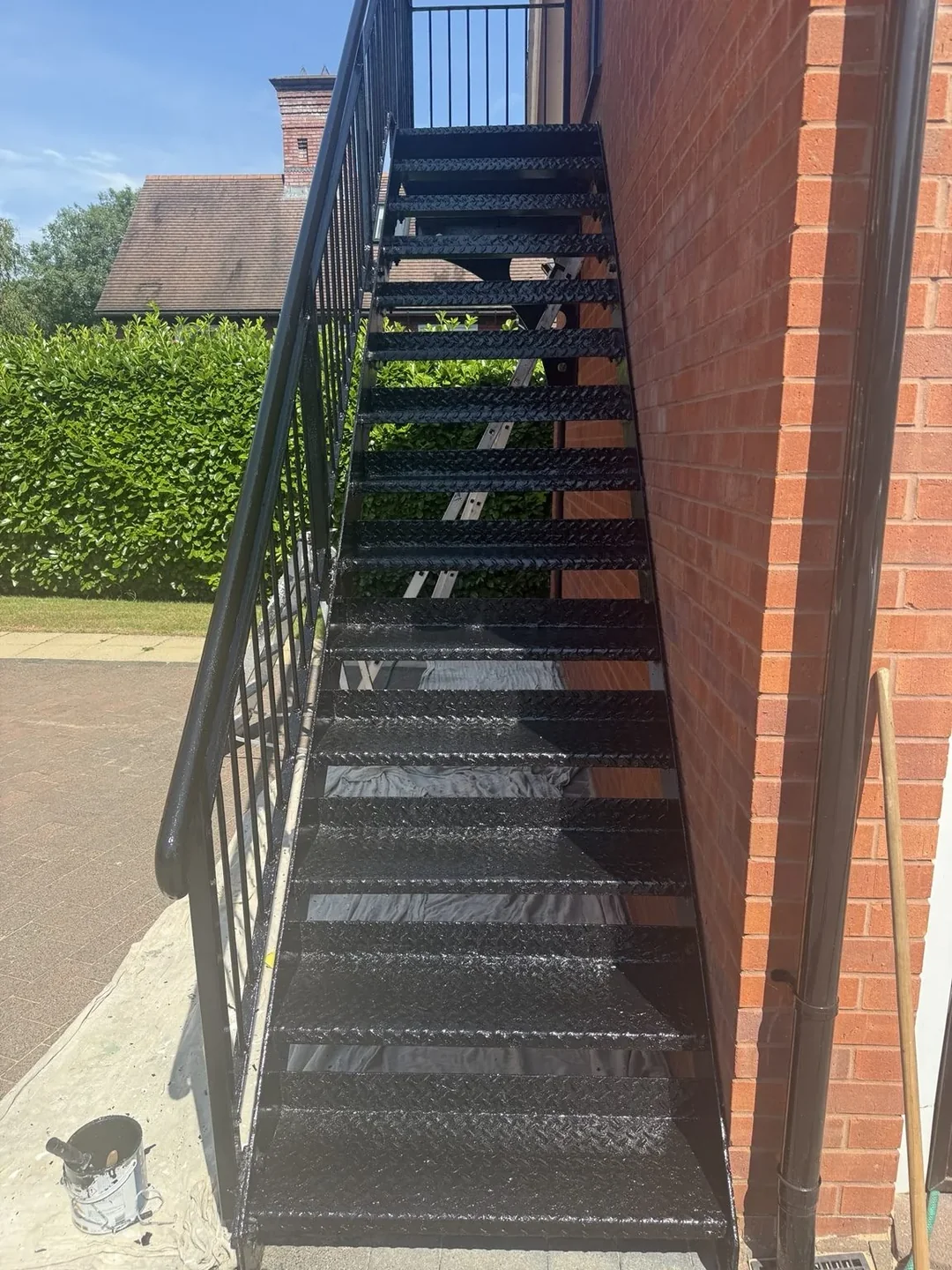
Our Cheshire metal staircase case study shows the existing condition, preparation areas and completed finish. JP Whyte Decorators can assess suitable metalwork as part of an exterior decorating quote.
Treat corrosion as a system
Rust staining and flaking usually show where water sits or the old coating has lost adhesion. Preparation may include degreasing, removing loose coating and corrosion, feathering sound edges and applying a compatible primer. The required standard depends on the metal, condition and chosen system.
Pay attention to difficult details
Welds, bolts, underside edges, joints and contact points are common failure areas. They are slower to prepare and easy to miss from one working position. Gates also move, so closing edges should not be loaded with paint that causes sticking.
Manage access safely
Exterior stairs may be a fire escape or the only route to a property. Agree closures, drying time and alternative access before work starts. Wet coatings can make steps and handrails unsafe. Public or shared areas need barriers and clear communication.
Check compatibility
Do not assume every direct-to-metal product can go over every existing finish. Read the technical data, test adhesion where appropriate and observe overcoating windows. Coastal, industrial or heavily exposed locations may require a more robust specification. After completion, inspect high-wear points periodically so small failures can be dealt with before corrosion spreads.
Would you rather have it done professionally?
Planning a decorating project in Cheshire? Call 07377 812846 or use the contact form for a free quote.
Get a free quote