Some wallpaper releases with warm water and patience; other coverings resist because the face is washable, layers have been painted or the adhesive is different. Start with the least aggressive method that works.
Test a small area
Lift a seam or corner carefully and identify whether the decorative face peels away from a backing. Check the wall beneath. Old plaster, lining paper and plasterboard face paper can be damaged by force or excess moisture.
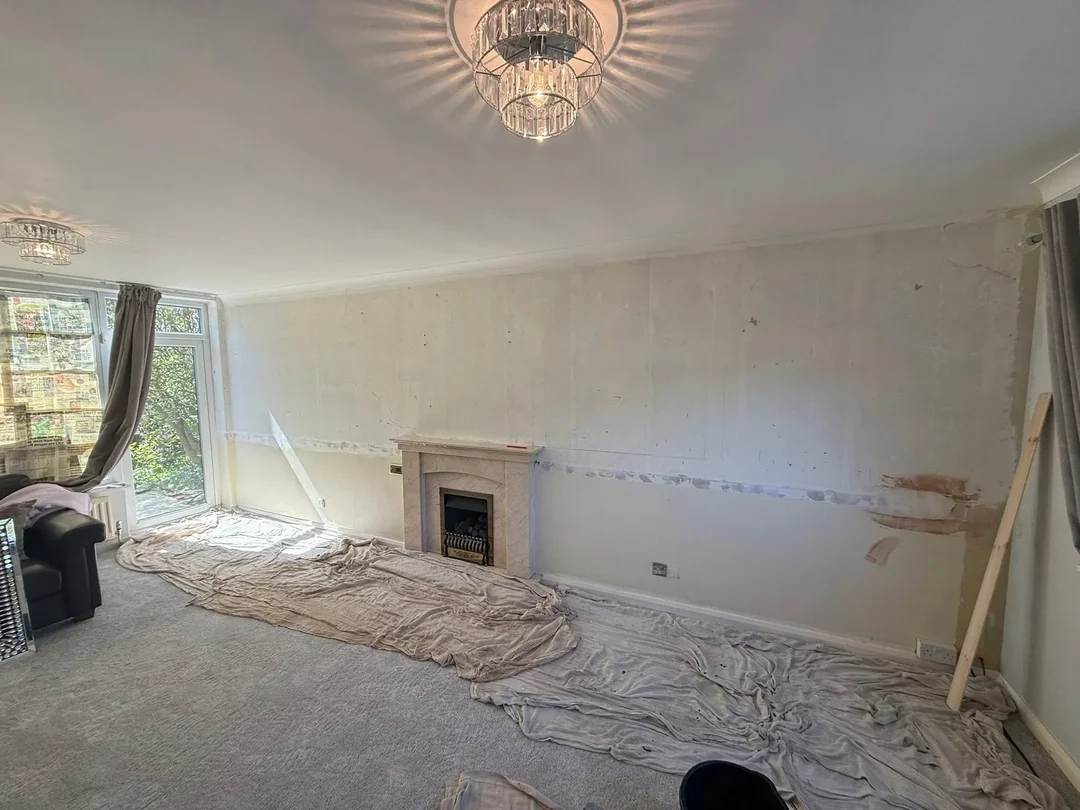
Protect the floor and isolate electrical risks before introducing water or steam near sockets and switches. If you are not competent to remove electrical fittings safely, work around them or obtain appropriate help.
Scoring and soaking
A perforating tool can help water reach a sealed surface, but pressing too hard can damage plaster or plasterboard. Apply warm water or the removal solution as directed, allow time to work, then test with a broad scraper.
Repeat controlled soaking rather than flooding the wall. Keep water away from electrical points and adjoining timber or flooring.
Using a scraper
Use a sharp, controlled scraper at a shallow angle. Driving a narrow blade into the wall creates gouges that need filling. Remove softened adhesive as work progresses so it does not dry back on the surface.
When a steamer helps
A wallpaper steamer can help with stubborn layers, but it adds heat and a large amount of moisture. Follow the equipment instructions, keep the plate moving as required and avoid prolonged steaming on one spot.
Steam can soften weak plaster, release lining paper that was meant to remain or damage plasterboard face paper. Stop if the substrate becomes soft, blown or visibly affected.
After removal
Wash adhesive residue using a method suitable for the wall, allow the surface to dry and inspect under good light. Repairs, sanding, lining or primer may be needed before painting or repapering.
Do not coat over wet adhesive residue. It can interfere with paint or the next wallpaper installation.
When professional removal helps
Painted papers, several layers, high stairwells and weak old plaster can make removal slow and unpredictable. JP Whyte Decorators can include suitable wallpaper removal and wall preparation in a Cheshire decorating quote.
Identify the wall and covering first
Removal methods depend on whether the wall is plaster, plasterboard or another substrate, and whether the covering is strippable, vinyl-faced or heavily overpainted. Test a small area in an inconspicuous position. Pulling hard or saturating plasterboard can damage its paper face.
Start with the least aggressive method
Try dry stripping where the product allows. If backing remains, use the wallpaper manufacturer's recommended soaking method. Score only when needed and use a tool that will not gouge the wall. Protect floors and isolate electrical power before working around switches or sockets.
Use steam with care
Steam can soften stubborn paste but introduces heat and a large amount of moisture. Work in short sections, keep the plate moving and avoid prolonged steaming over weak plaster or electrical fittings. Wear suitable gloves and position the unit so the hose cannot become a trip or burn hazard.
Prepare after stripping
Wash remaining paste according to the planned coating system, allow the wall to dry and inspect for loose surface, tears and cracks. Repair and prime as needed. Painting over paste residue can cause adhesion and staining problems, so removal is not complete when the last visible strip comes off.
Would you rather have it done professionally?
Planning a decorating project in Cheshire? Call 07377 812846 or use the contact form for a free quote.
Get a free quote