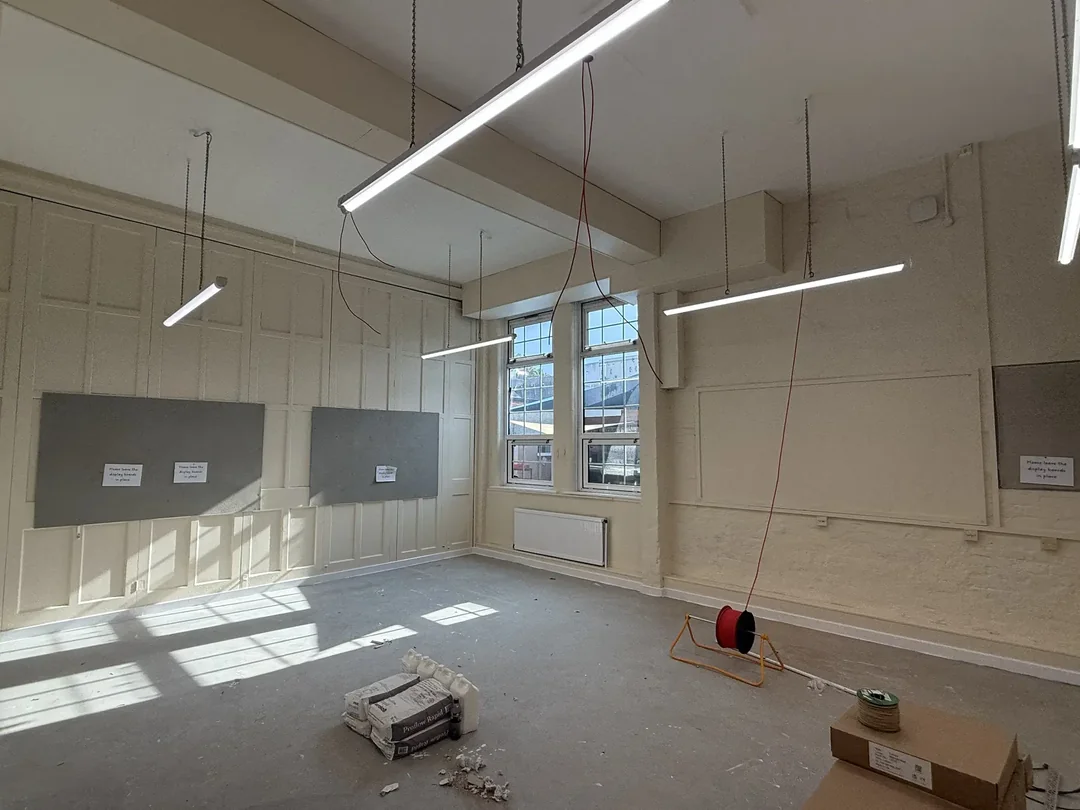
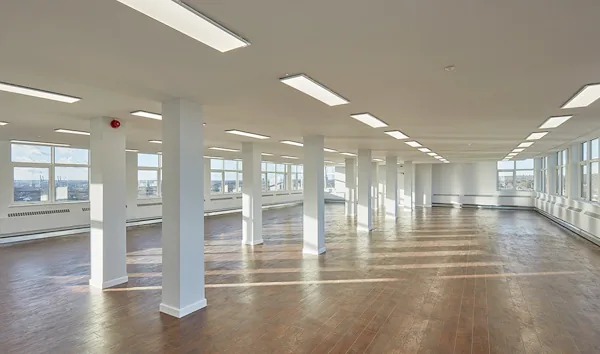
The amount and type of surface
Ceilings, walls, doors, frames, skirting, fixed joinery, metalwork and exterior areas are measured and prepared differently. A room count alone does not show ceiling height, door quantity or the amount of detailed cutting-in required.
Existing condition and preparation
Cleaning, scraping, filling, sanding, local repairs, stain isolation, primers and failed coatings add time and materials. Water ingress, movement or extensive substrate failure may need another trade or specialist investigation before decoration can be priced confidently.
Access equipment and building constraints
High areas, restricted loading, permits, security, occupied spaces and limited storage affect the programme. Suitable access equipment must be chosen for the task and environment. If the site remains open, protection and daily handover can be a significant part of the work.
Working hours and project phasing
Evening, weekend, holiday or tightly phased work may reduce disruption but can change labour and supervision requirements. The cost should be compared with the operational benefit rather than treated as an automatic extra or saving.
Coating system and finish requirements
The substrate, cleaning regime, wear level, colour change and intended appearance guide the product system. The cheapest tin is not necessarily the lowest whole-project cost if it needs extra preparation, coats or early maintenance. Manufacturer guidance should be checked for suitability.
What a useful quote should show
Look for included areas, preparation assumptions, products or performance requirements, protection, access, working hours, waste, exclusions, programme and handover. Provisional items should be labelled so they are not mistaken for fixed work.