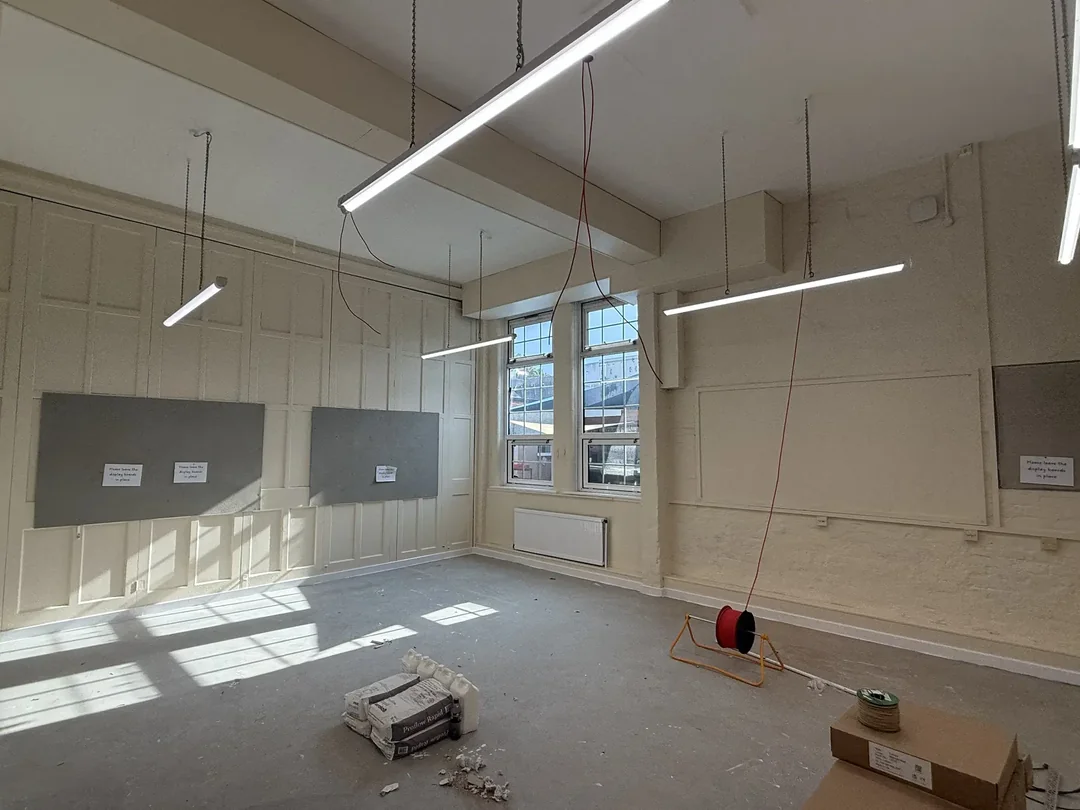
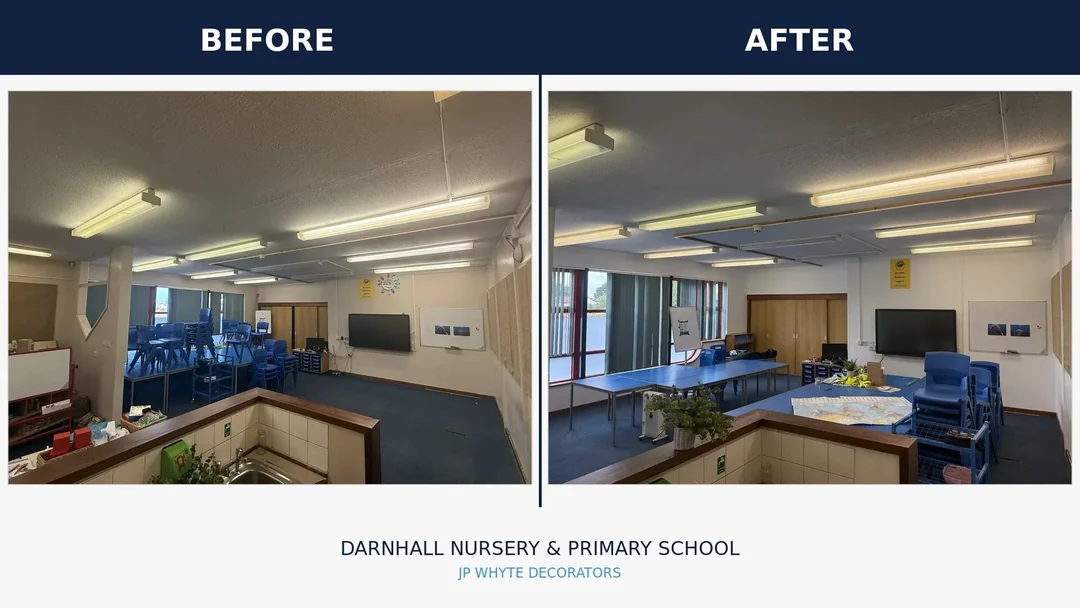
Preparation for school decorating is about more than filling and sanding walls. Classrooms are busy working spaces with furniture, displays, technology and fixed equipment. Agreeing how these items will be handled protects the school, gives decorators room to work and makes the handover much easier.
Walk through every area in the quote
Before work begins, inspect each classroom, corridor or shared area with the decorator. Confirm exactly which walls, ceilings, doors, frames, skirting boards, cupboards and other surfaces are included. Note damaged areas, water marks, loose paint and repairs that may need a decision before decoration starts.
A room-by-room schedule is useful on a multi-room project. It reduces misunderstandings and gives the school a simple record for the final inspection.
Remove small, valuable and personal items
Books, paperwork, teaching resources, decorations and small equipment are easier to protect when they are removed from the working area. Lock away confidential documents and anything containing personal information. Do not leave fragile or valuable items balanced on shelves or desks under a dust sheet.
Label boxes by classroom if items will be stored elsewhere. This takes a little time at the start but prevents confusion when rooms are being put back together.
Agree how furniture will be handled
Decide whether desks, chairs and movable storage will leave the room or be grouped in a safe position. The best arrangement depends on the room size and the surfaces being painted. Decorators still need clear access to walls, sockets, doors and woodwork, as well as safe routes for ladders and materials.
Heavy or fixed items should be identified during the site visit. Agree who is responsible for moving anything that needs specialist handling, and avoid moving equipment in a way that could damage floors or connections.
Protect floors and fixed fittings
Floor protection should suit the floor type and the length of the job. Carpet, vinyl, timber and entrance matting may need different protection. Covering should remain secure without creating raised edges or slippery routes.
Fixed cupboards, worktops, sinks, display boards, whiteboards and teaching equipment should be masked or covered where they are close to the work. Handles, switches and other details may need careful protection or removal and refitting, depending on the agreed scope.
Plan around displays, signs and wall fixings
Decide whether noticeboards, signs, clocks, hooks and display materials are staying in place. Painting around unnecessary items often leaves an incomplete finish and makes future changes more obvious. Removing them can give a cleaner result, but the school and decorator should agree who will take them down and refit them.
If wall fixings are no longer needed, identify which holes should be filled. Keep fixings that will be reused in labelled bags so they can be returned to the correct room.
Protect technology and electrical equipment
Computers, screens, projectors, charging stations and other technology should be shut down and protected according to the school's own procedures. Small equipment is usually best removed. Fixed devices should not be covered in a way that blocks required ventilation while they are operating, so they may need to remain switched off during dusty preparation.
The decorator should be told about equipment that must not be disconnected or moved. Any electrical work should be handled by a suitably competent person rather than treated as part of ordinary decorating.
Keep safety equipment visible and usable
Fire exits, emergency signs and escape routes must remain clear. Discuss alarms, detectors, sprinklers, security devices and other safety equipment before work begins. These items should not be painted over or left covered after the working period. If temporary protection is appropriate during painting, it must be managed and removed as agreed.
Share relevant site safety information and identify any surfaces or materials that must not be disturbed. If unexpected material or damage is uncovered, work in that area should pause until the school has confirmed the safe next step.
Control dust, waste and cleaning
Sanding and repair work can create dust even when extraction and local protection are used. Agree how work areas will be separated from rooms that remain in use and how waste will leave the site. Make sure cleaners and decorators know who is completing the final clean and when it will happen.
Good housekeeping throughout the project is more effective than relying on one large clean at the end. Access routes should remain orderly, and paint or tools should be stored securely when the site is unattended.
Photograph rooms before and after
A quick photographic record helps with furniture layout, existing damage and the condition of completed rooms. It is particularly helpful when several classrooms are decorated at once. Photographs should focus on the room and work, avoiding pupil information, names and identifiable people.
Complete a room-by-room handover
Before each room returns to use, check that protection and waste have been removed, fittings are uncovered, routes are clear and the agreed surfaces are complete. Confirm who will return furniture and displays, and allow the coating to reach the stage recommended by the manufacturer before items touch the walls.
Preparation checklist
- Confirm every room and surface included in the quote.
- Remove small items, paperwork and confidential information.
- Agree furniture movement and floor protection.
- Identify displays, signs and fixings to remove or retain.
- Secure or protect technology and fixed equipment.
- Keep exits, safety signs and essential equipment clear.
- Share site rules and restricted areas.
- Agree dust control, waste removal and final cleaning.
- Photograph layouts and complete a final handover.
A clear protection plan gives decorators a safer, more efficient workspace and helps the school return each room to normal with fewer delays.
Would you rather have it done professionally?
Planning a decorating project in Cheshire? Call 07377 812846 or use the contact form for a free quote.
Get a free quote